
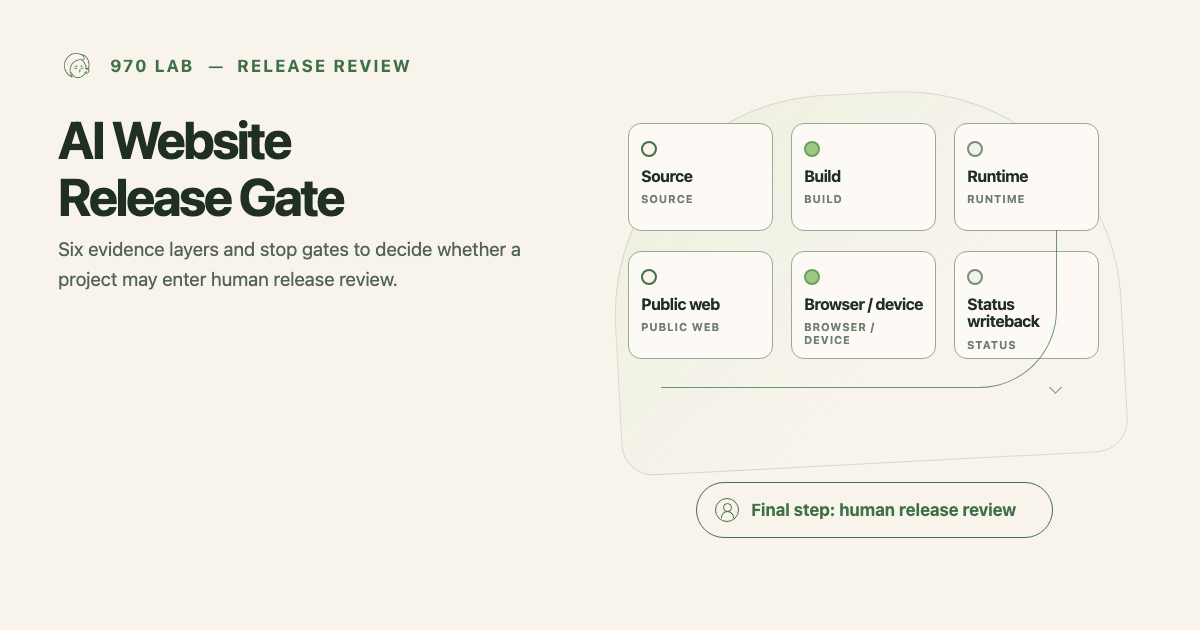
AI finishing a page does not mean release has happened. A page opening, a passing build, and an attractive screenshot are local results, not a release decision.
A method that can be reused should show a team which evidence exists, which gaps stop the next step, and who still makes the public decision.
Separate the six evidence layers
Check source, build, runtime, public web, browser or device, and status writeback in sequence. Each answers a different question; an earlier layer cannot stand in for a later one.
This is not an extra layer of ceremony. It prevents “it runs locally,” “the page opens,” or “someone took a screenshot” from becoming the same completion claim.
A stop gate must stop the next step
Unclear facts or permission; conflicting privacy, indexing, or environment settings; broken mobile, accessibility, or key-entry behaviour; an unprovable live version; or no rollback point should each return a blocker.
One successful check cannot cover any of those gaps. Stopping is not failure; it keeps a not-yet-public state honest.
Automation and human judgement have different jobs
Automation is useful for finding syntax, asset, route, metadata and consistency gaps, so a problem is visible earlier.
Public scope, asset use, experience quality and entry into production remain human decisions.
Public readback is not an optional appendix
After production, return to the formal domain and inspect the actual page, language version, links and known boundaries. One HTTP 200, one Preview, or one screenshot cannot replace this step.
If the observed result differs from the build record, locate its evidence layer before deciding whether to stop or roll back.
Write status back to the original facts source
Confirmed, unconfirmed, unavailable and still-to-be-verified states must remain distinct. The next release can then start from current reality rather than treating an old conclusion as current.
This method does not promise that a website will never fail, nor claim to be an industry standard. It only separates “may enter human release review” from “is publicly live.”